
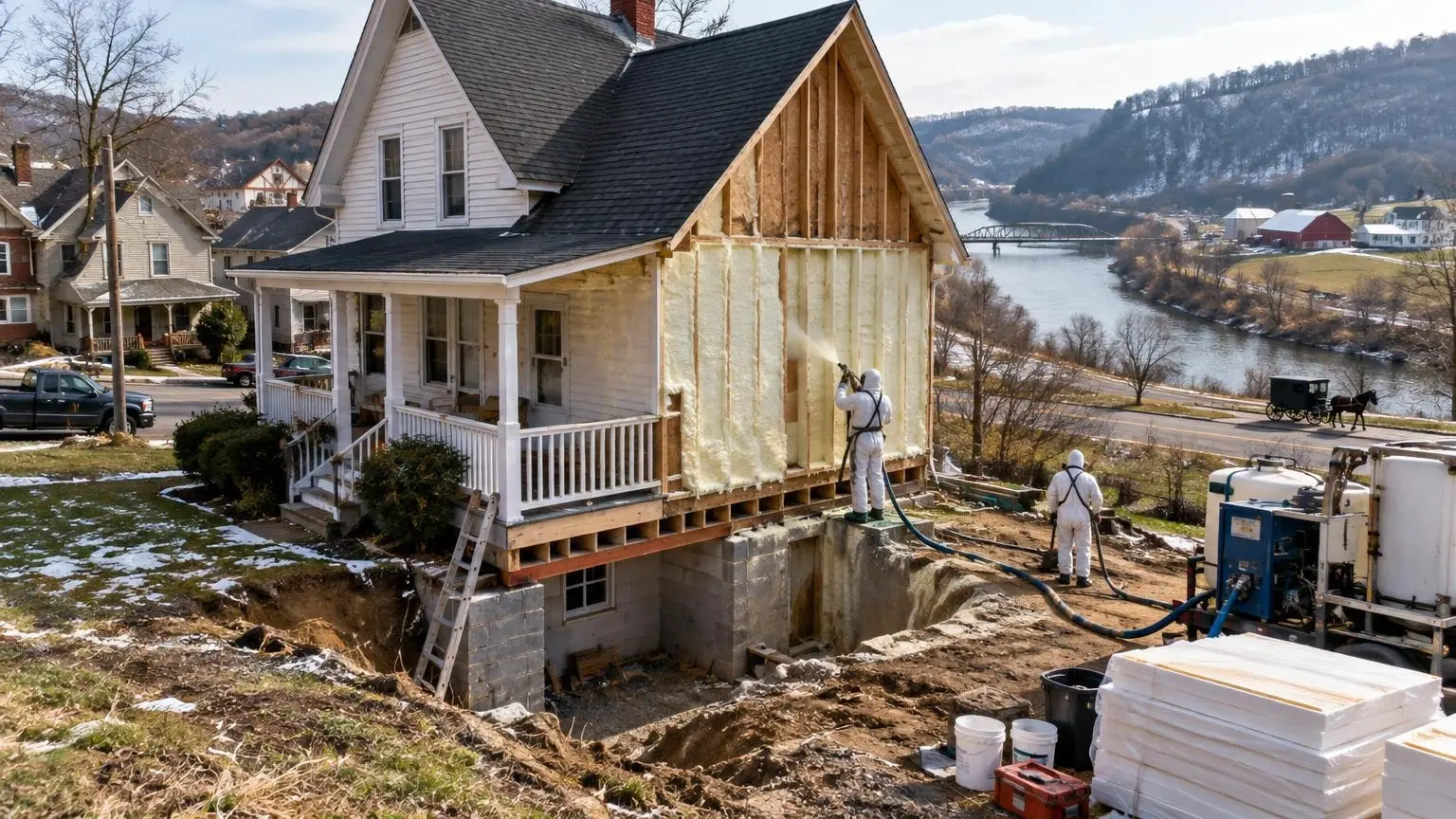
Canal-era homes, river valleys and Amish Country barns
Spray Foam Insulation in Dover, OH
Foam where it pays, blown-in where it is enough, and a written price for every space.
- Free in-home estimates in Tuscarawas, Holmes and western Stark counties
- Itemized quote: material, depth or thickness, R-value and price per space
- Moisture, roof and wiring problems pointed out before we insulate
Warmer Houses in the Tuscarawas Valley
Spray foam insulation in Dover has to deal with two things the valley has plenty of: old houses and damp air. Dover sits on the Tuscarawas River near the mouth of Sugar Creek, and it started life as Canal Dover on the Ohio and Erie Canal, incorporating as a village in 1842. Point2Homes, using American Community Survey data, counts 23.8% of the city's homes as built before 1940. We are insulation contractors who seal and insulate those houses, along with the newer ranches, shops and barns around them, choosing open-cell or closed-cell foam where it is worth the money and blown-in insulation where it does the same job for less.
Zone 5A, in plain numbers
Tuscarawas County, like most of Ohio, is assigned to Climate Zone 5A in Table 1101.7 of the state's residential energy code (Ohio Administrative Code 4101:8-11-01). For new and remodeled work, that table calls for R-49 in ceilings, R-20 or R-13 plus R-5 continuous in wood-frame walls, R-30 under floors that sit over unheated space, and R-10 continuous or R-13 cavity on basement and crawl space walls. For attics in existing homes, ENERGY STAR's Zone 5 guidance is R-60 when the attic is empty and roughly R-49 added when 3 to 4 inches are already down. We size every quote against those numbers.
A housing mix with two peaks
Dover's homes come in two main waves. The older wave, the pre-1940 houses near the river and downtown, were built for canal, mill and sheet-steel workers; the city's library was founded in 1902 by the American Sheet and Tin Plate Company for its employees. Those houses often have empty walls, balloon framing, and attics with a few inches of old fill. The second wave came in the 1970s, which produced 19.2% of the city's housing; those ranches and split-levels have some insulation but were never air sealed, and their rim joists are usually bare.
Closed cell vs open cell for valley homes
Closed-cell foam is dense and water-resistant, rated by HomeGuide at roughly R-5 to R-7 per inch, and it slows vapor at normal thickness. That makes it the right material against cold, damp surfaces: rim joists, basement walls, crawl space walls and the steel of a barn roof. Open-cell foam is lighter, roughly R-3.5 to R-3.7 per inch, and good at sealing and sound control in interior walls and some rooflines, but it lets vapor pass and should not sit against masonry that sweats. On an open attic floor, sealing gaps and blowing in loose fill usually beats foam on cost.
River-valley moisture
Low ground along the Tuscarawas and Sugar Creek means basements and crawl spaces that run damp in summer. When warm, humid air reaches a cool foundation wall, it condenses, and fiberglass batts on a rim joist hold that moisture against the wood. Closed-cell foam bonded to the rim and sill leaves no air gap for condensation. In crawl spaces we pair foam on the walls with a sealed ground cover. If water is coming through a wall, that repair comes first.
Barns, shops and ag buildings
North and west of Dover, into Holmes County, steel and post-frame buildings are everywhere: machine sheds, woodworking shops, equipment storage, livestock barns. Bare steel sweats when warm, moist air hits it, and the drip ruins tools and stored goods. Closed-cell foam sprayed straight onto the panels stops the drip and lets a shop hold heat.
Hiring an insulation company: what to ask
When you collect quotes from spray foam insulation companies or other insulation contractors near you, ask each one the same things. Which foam goes where, at what thickness, reaching what R-value? What gets sealed before insulating? How is the house ventilated during spraying, and how long do you stay out (HomeGuide says 24 hours or more)? What happens to old insulation that is wet or full of droppings? Is the price broken out by space? Our quote answers each of those.
What spray foam insulation costs
HomeGuide's 2026 figures put installed spray foam at $1.50 to $5.00 per square foot overall: $1.50 to $3.50 for open-cell and $3.00 to $5.00 for closed-cell. Foam on rim joists runs about $2,000 to $2,500 and a crawl space $2,000 to $4,000, while many installers set a minimum of $1,000 to $2,000 or more. Fixr lists foam in existing walls at $3.15 to $7.50 per square foot. These are national ranges for planning; the actual price for your house is the number on our written estimate.
Insulation Services
From the attic to the crawl space to the barn roof, each service is priced on its own so you can do the work in the order that makes sense.
Spray Foam Insulation
Closed-cell and open-cell foam that seals and insulates in one layer, sprayed where a valley home or building needs it.
Learn more →Attic Air Sealing & Insulation
Seal the holes in the attic floor, then bring it up to R-49 or more with blown-in or foam.
Learn more →Rim Joist & Basement Insulation
Closed-cell foam on the rim joist and basement walls, where cold air and damp meet the house.
Learn more →Barn, Shop & Ag Building Insulation
Closed-cell foam on steel and post-frame buildings to stop dripping and hold heat.
Learn more →Blown-In Insulation
Cellulose or fiberglass blown into attics and closed walls, the cost-effective way to add R-value.
Learn more →Crawl Space Insulation
Sealed, insulated crawl spaces with closed-cell foam on the walls and a ground cover underneath.
Learn more →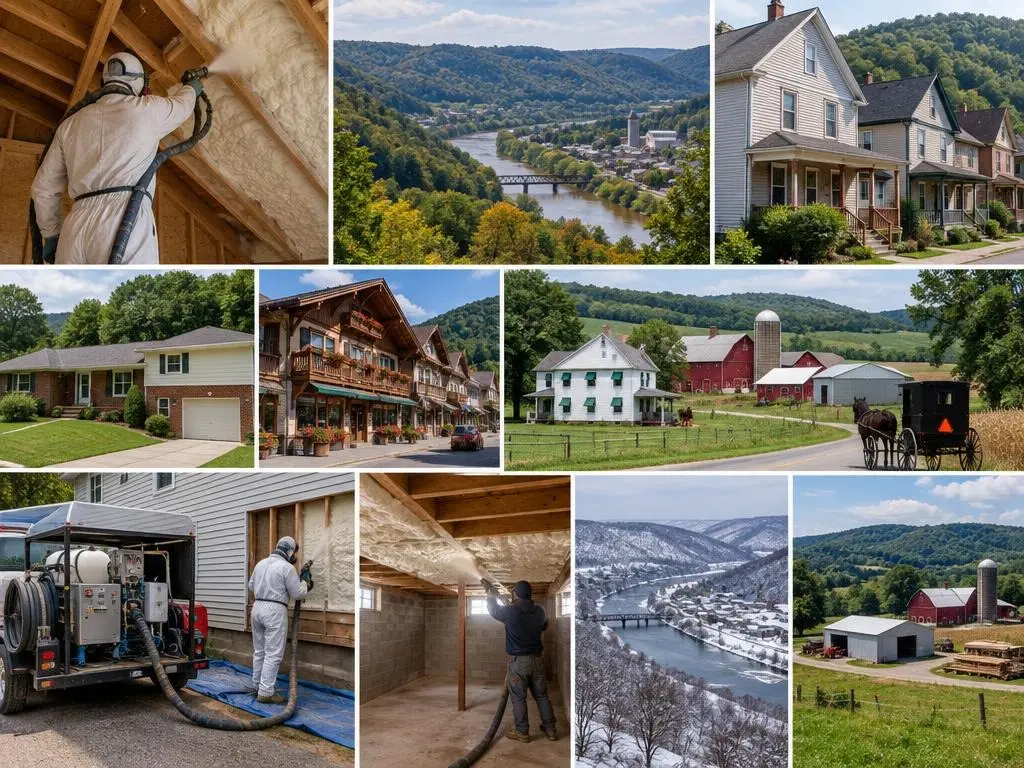
Where We Work
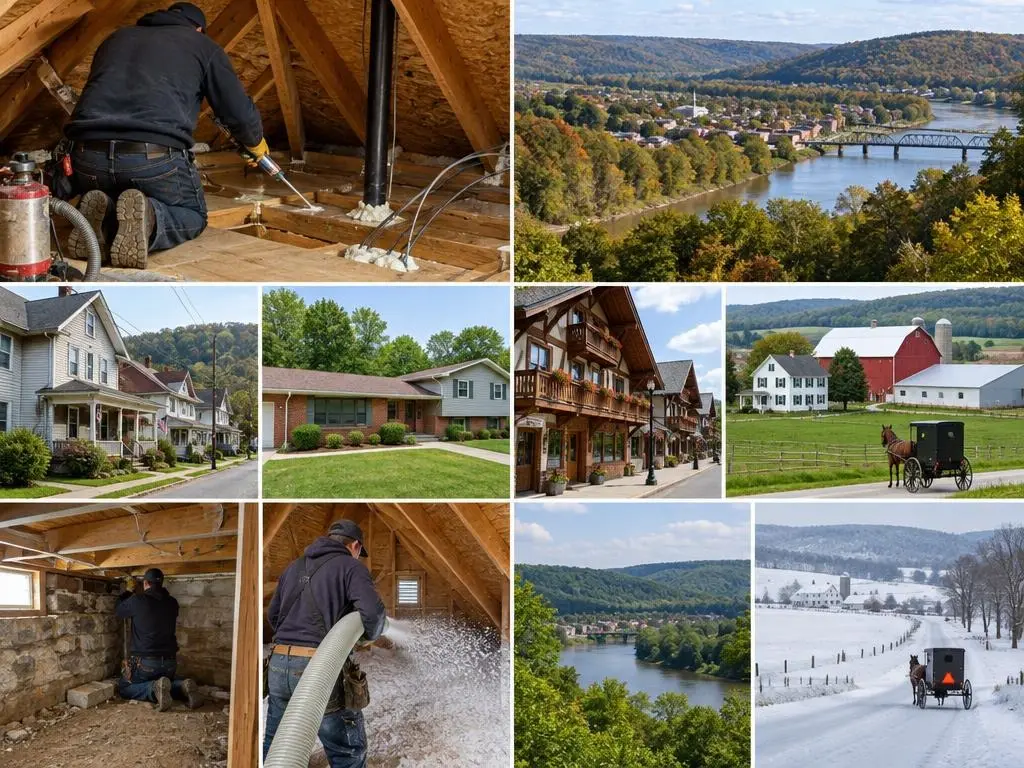
Our area runs from Dover and New Philadelphia up the Tuscarawas River through Zoar, Bolivar and Navarre to Massillon, and up Sugar Creek through Strasburg, Beach City and Brewster. To the west we cover Sugarcreek and Baltic and cross into Holmes County for Berlin and Millersburg. The canal towns hold the oldest houses; the Sugar Creek villages mix older homes with newer edges; Amish Country adds barns, shops and woodworking buildings that need foam more than houses do. Each town page explains what we see there.
- Spray Foam Insulation in Dover, OH
- Spray Foam Insulation in New Philadelphia, OH
- Spray Foam Insulation in Strasburg, OH
- Spray Foam Insulation in Bolivar, OH
- Spray Foam Insulation in Zoar, OH
- Spray Foam Insulation in Sugarcreek, OH
- Spray Foam Insulation in Baltic, OH
- Spray Foam Insulation in Beach City, OH
- Spray Foam Insulation in Brewster, OH
- Spray Foam Insulation in Navarre, OH
- Spray Foam Insulation in Massillon, OH
- Spray Foam Insulation in Berlin, OH
- Spray Foam Insulation in Millersburg, OH
Why Homeowners Call Spray Foam Insulation Dover
Measured, not guessed
We go into the attic and the basement before quoting, so the price matches the house.
Material matched to the space
Closed-cell where moisture is a risk, open-cell for sound and interior work, blown-in where it costs less for the same R-value.
Problems found first
Damp walls, roof stains, mold, old wiring and vermiculite get flagged before anything is covered up.
Itemized pricing
Each space has its own line, so you can compare quotes and phase the work.
Common Questions
What can spray foam have the highest R-value?
Closed-cell foam has the highest R-value per inch, about R-5 to R-7 according to HomeGuide, compared with roughly R-3.5 to R-3.7 for open-cell. That is why closed-cell is used where space is tight, like a 2x4 wall or a rim joist.
Why do some people call spray foam a red flag?
The concerns trace back to bad installs: foam mixed wrong that smells or shrinks, or foam sprayed over a roof deck that was already leaking, hiding rot. Inspectors and buyers may also want to see the roof deck. We inspect the roof and framing first and document what we spray.
How much does spray foam insulation cost in Dover?
National ranges from HomeGuide run $1.50 to $5.00 per square foot installed, with minimum charges around $1,000 to $2,000 or more. A rim joist job often lands near $2,000 to $2,500. We quote after seeing the house, and that quote is the price.
Is there a high temperature spray foam?
Standard spray foam is not meant for hot surfaces. Chimneys, flues and recessed lights need clearances and metal or fire-rated materials around them, which we install before insulating near them.
Do you insulate Amish and Mennonite shops and barns?
Yes. We spray closed-cell foam on steel and post-frame buildings across the valley and into Holmes County.
Do I need to leave during spraying?
Yes. HomeGuide recommends staying out at least 24 hours after spray foam is applied. Blown-in insulation does not need that.
Get a Spray Foam Insulation Estimate
We look at the house or building, explain what we found and send an itemized written price.